


Why Small Modular Reactors Could Transform Europe's Future Energy Infrastructure
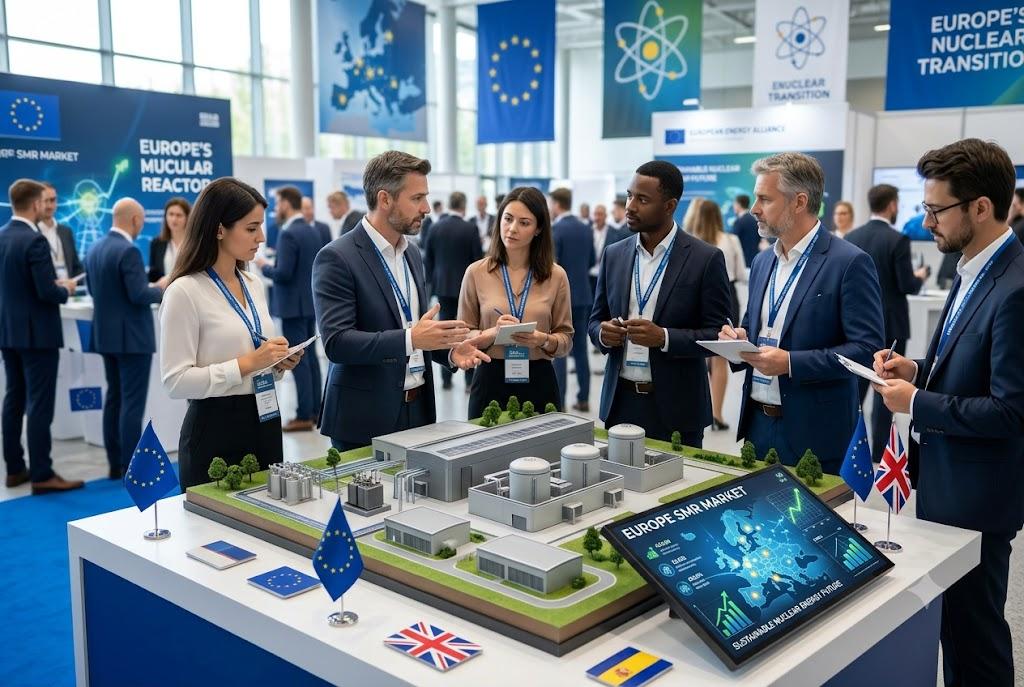
Europe Small Modular Reactors Market Growth: Unlocking Opportunities in Europe's Nuclear Energy Transition
Europe's energy sector is undergoing a significant transformation as governments, utilities, industrial companies, and technology developers explore reliable alternatives to conventional fossil-fuel generation. Small Modular Reactors (SMRs) are attracting increasing attention because they offer a potential pathway toward dependable, low-carbon electricity production. Their modular construction approach, scalable capacity, and potential integration with existing energy infrastructure position them as an important technology within Europe's evolving nuclear landscape.
The European energy transition requires solutions that can complement intermittent renewable generation while supporting electricity demand from manufacturing, transportation, digital infrastructure, and heating. Wind and solar power are expanding across European countries, but their variable generation creates additional requirements for flexibility and dependable capacity. SMRs could contribute to this requirement by providing consistent electricity and potentially supporting industrial heat applications.
Technology Development and Deployment Potential
Unlike traditional large nuclear power stations, SMRs are designed around comparatively smaller reactor units and standardized manufacturing concepts. Their modular architecture aims to simplify construction, improve manufacturing efficiency, and allow projects to expand according to electricity demand. Factory-based production could reduce certain construction uncertainties, although commercial competitiveness will depend on manufacturing scale, supply-chain readiness, licensing, and project execution.
Several reactor technologies are under development, including light-water designs, high-temperature gas reactors, molten-salt concepts, and fast reactors. Each technology offers different operating characteristics, fuel requirements, temperature ranges, and potential applications. European developers are evaluating these designs according to safety requirements, industrial suitability, investment conditions, and national energy strategies.
Government Policies and Regulatory Coordination
Policy support will significantly influence deployment prospects. European countries have different approaches toward nuclear energy, creating a diverse regulatory environment. Some governments consider advanced nuclear technologies essential for energy security and decarbonisation, while others prioritize renewable generation and alternative flexibility solutions.
Regulatory harmonisation is particularly important because standardized reactor designs could potentially serve multiple European markets. However, nuclear licensing remains a national responsibility, requiring developers to satisfy country-specific safety assessments, environmental requirements, construction permissions, and operating conditions. Cooperation between regulators could improve technical understanding and reduce unnecessary duplication without weakening safety standards.
The European Union's broader climate objectives also create opportunities for technologies capable of providing low-carbon electricity. Nevertheless, project developers must demonstrate economic viability, waste-management arrangements, fuel availability, and credible decommissioning strategies before commercial deployment can accelerate.
Industrial Applications and Electricity Demand
Industrial electrification represents another potential demand source. Chemicals, steel, refining, district heating, and other energy-intensive industries require dependable energy supplies. Certain advanced reactor configurations may provide process heat alongside electricity, potentially supporting industrial decarbonisation where direct electrification remains challenging.
Data centres are also attracting attention because artificial intelligence, cloud computing, and digital services are increasing electricity requirements. Operators increasingly prioritize reliable, continuous power and predictable long-term energy costs. SMRs could eventually become an option for selected large facilities, although commercial availability, grid connections, financing, and regulatory approvals remain important considerations.
Investment Environment and Competitive Positioning
Investors are evaluating technology developers, engineering companies, component manufacturers, fuel suppliers, construction contractors, and specialist nuclear service providers. Opportunities extend beyond reactor ownership into the wider supply chain. However, investment decisions require careful assessment of project maturity, intellectual property, financing structures, technology readiness, and delivery schedules.
The Europe Small Modular Reactors Market Growth perspective highlights the importance of examining deployment pipelines, national strategies, technology competition, and commercial readiness together. These factors will determine whether proposed projects progress toward construction and operation.
Challenges Influencing Commercialisation
Despite considerable interest, SMRs face significant barriers. First-of-a-kind projects may experience construction delays, cost overruns, and financing difficulties. Nuclear fuel supply chains require specialized capabilities, while radioactive waste management and public acceptance remain essential considerations. Developers must also demonstrate that modular manufacturing can deliver genuine cost advantages at commercially meaningful production volumes.
Future Industry Outlook
Europe's SMR landscape will develop through regulatory progress, engineering demonstrations, investment commitments, and partnerships. Projects that combine credible technology, established industrial partners, transparent economics, and strong government coordination may gain competitive advantages.
Ultimately, SMRs should be evaluated as a potential complement to renewable energy, grid infrastructure, and conventional generation rather than an automatic replacement for existing technologies. Their long-term contribution will depend on proven safety, commercial performance, and their ability to meet Europe's evolving energy requirements.

 English
 Arabic
 French
 Spanish
 Portuguese
 Deutsch
 Turkish
 Dutch
 Italiano
 Romaian
 Portuguese (Brazil)
 Greek
