


Sudoku: Explore the Ultimate Number Puzzle for Brain Training
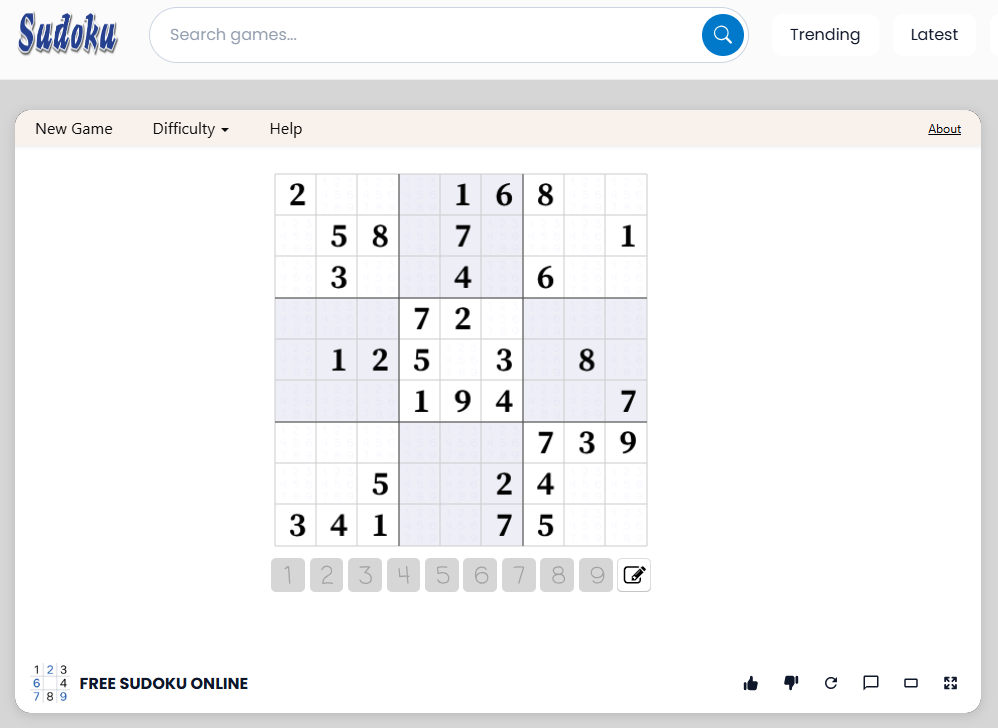
Sudoku is a popular number puzzle that offers an enjoyable way to challenge the mind, improve logical thinking, and develop problem-solving skills. With simple rules and countless possible combinations, this puzzle attracts players of different ages and experience levels. Whether you are a beginner learning the basics or an experienced player looking for a difficult challenge, Sudoku provides an engaging activity that combines entertainment with mental exercise.
Unlike many traditional games, Sudoku does not require complicated equipment or advanced mathematical knowledge. Players only need patience, concentration, and a willingness to think logically. Every puzzle creates a new opportunity to discover patterns, test strategies, and complete an exciting numerical challenge.
What Is Sudoku and Why Is It So Popular?
Sudoku is a logic-based number puzzle played on a nine-by-nine grid. The main objective is to fill every empty square with a number from 1 to 9 while following a set of simple rules.
Each row, column, and three-by-three section must contain every number from 1 to 9 without repetition. Although the rules are easy to understand, completing a puzzle can require careful observation and several stages of logical reasoning.
A Simple Puzzle With Endless Challenges
One reason Sudoku remains popular is the balance between simplicity and difficulty. Beginners can start with easy puzzles that provide plenty of clues, while experienced players can explore advanced challenges that require deeper analysis.
Every completed grid creates a satisfying feeling of achievement. Players can gradually improve their abilities by recognizing patterns and learning more efficient solving techniques.
Suitable for Different Age Groups
Sudoku is accessible to children, teenagers, adults, and older players. Young learners can use simple puzzles to practice concentration and numerical recognition. Adults may enjoy the challenge as a relaxing break from daily responsibilities.
The flexible difficulty levels make Sudoku an enjoyable activity for almost anyone who appreciates puzzles and logical games.
How to Play Sudoku Effectively
Understanding the basic rules is the first step toward becoming a confident player. Although the grid may initially look complicated, a systematic approach makes the solving process much easier.
Understand the Three Main Rules
Every Sudoku puzzle follows three essential rules. First, each horizontal row must contain the numbers 1 through 9 exactly once. Second, every vertical column must also contain all nine numbers without repetition. Third, each three-by-three box must include the complete set of numbers.
Players must consider all three requirements before placing a number in an empty square. A number that fits one row may still create a conflict in its column or box.
Start With the Easiest Opportunities
A useful strategy is to examine rows, columns, and boxes that already contain many numbers. These areas often have fewer missing possibilities, making them easier to complete.
Instead of guessing, identify which numbers are missing and compare the available positions. This approach reduces mistakes and helps players develop consistent solving habits.
Best Strategies to Improve Sudoku Skills
Becoming better at Sudoku requires practice and an understanding of useful logical techniques. Learning a few basic strategies can make difficult puzzles feel more manageable.
Use the Scanning Technique
Scanning is one of the simplest methods for finding missing numbers. Players examine a particular number across different rows and columns to identify possible locations inside an empty three-by-three box.
By eliminating positions that already contain the same number, it becomes easier to discover where that number belongs.
Identify Naked Singles
A naked single appears when an empty square has only one possible number remaining. This happens when the other eight numbers are already present in the corresponding row, column, or box.
Finding these squares is an effective way to make progress without guessing. After filling one square, check nearby areas again because the new number may reveal additional opportunities.
Look for Hidden Singles
A hidden single occurs when a number has only one possible position within a particular row, column, or box, even if that square contains several other candidates.
Recognizing this pattern requires careful observation. It is particularly useful when a puzzle becomes more challenging and obvious placements are no longer available.
Benefits of Playing Sudoku Regularly
Sudoku offers more than simple entertainment. Regular puzzle practice encourages several mental habits that can be useful in everyday situations.
Develop Logical Thinking
Every placement must follow specific rules. Players learn to compare possibilities, eliminate incorrect options, and make decisions based on available information.
This process encourages structured thinking and helps develop a more organized approach to solving problems.
Improve Concentration and Attention
Completing a Sudoku puzzle requires players to focus on multiple areas of the grid. A small mistake can affect several later decisions, so careful attention is important.
Regular practice provides an opportunity to build patience and maintain concentration throughout a task.
Enjoy a Relaxing Mental Activity
Sudoku can provide a peaceful alternative to activities that involve constant notifications and distractions. Focusing on a puzzle allows players to concentrate on one clear objective at a time.
Many people enjoy solving a few grids during a break, while traveling, or before starting another activity. However, Sudoku should be considered an enjoyable mental exercise rather than a guaranteed way to prevent cognitive decline.
Different Sudoku Difficulty Levels
Sudoku puzzles are commonly divided into several difficulty levels. Each level offers a different experience depending on the number of starting clues and the logical techniques required.
Easy Sudoku for Beginners
Easy puzzles usually provide more initial numbers and straightforward solving opportunities. They are ideal for learning the rules, practicing scanning, and identifying simple placements.
New players should begin with this level before moving toward more complicated challenges.
Medium Sudoku for Skill Development
Medium puzzles require greater attention and more frequent use of candidate numbers. Players may need to combine scanning with techniques such as naked singles and hidden singles.
This level provides a useful balance between accessibility and challenge.
Hard Sudoku for Experienced Players
Hard puzzles often require advanced strategies and careful elimination. Players may need to recognize pairs, triples, and more complex relationships between candidate numbers.
These challenges are suitable for people who already understand the basic techniques and want to strengthen their logical reasoning.
Common Mistakes to Avoid When Solving Sudoku
Even experienced players can make mistakes when they rush through a puzzle. Understanding common problems can help create a more accurate solving process.
One frequent mistake is placing a number without checking its row, column, and three-by-three box. A number may appear correct in one area but conflict with another requirement.
Another common problem is guessing when no obvious answer is available. Guessing can create unnecessary confusion, especially in difficult puzzles. Instead, players should write down possible candidates and eliminate them through logical analysis.
Players should also avoid focusing on only one section of the grid. Moving between rows, columns, and boxes can reveal patterns that are difficult to notice from a single perspective.
Why Sudoku Remains an Enjoyable Puzzle Game
Sudoku continues to attract puzzle enthusiasts because it combines accessible rules with meaningful challenges. Every grid offers a different arrangement, encouraging players to approach each puzzle with fresh attention.
The game is also convenient because it can be enjoyed through printed puzzle books, newspapers, websites, and mobile applications. Players can choose a format that fits their daily routine and preferred playing style.
Another appealing feature is the sense of progress. Beginners can track improvements in accuracy and solving speed, while advanced players can explore increasingly demanding techniques.
Conclusion
Sudoku is much more than a simple number puzzle. It is an engaging activity that encourages logical thinking, concentration, patience, and problem-solving. From easy introductory grids to challenging advanced puzzles, there is always an opportunity to discover a new strategy and improve personal skills.
Whether you want a relaxing break or an interesting mental challenge, Sudoku offers an accessible and rewarding experience. Start with a puzzle that matches your current ability, practice consistently, and enjoy the satisfaction of completing every grid through logic and careful observation.

 English
 Arabic
 French
 Portuguese
 Deutsch
 Turkish
 Dutch
 Italiano
 Russian
 Romaian
 Portuguese (Brazil)
 Greek
